
About Deeyah
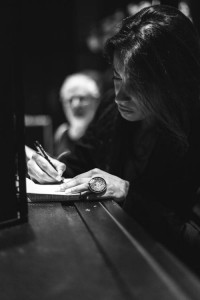
Documentary director and producer Deeyah Khan has won two Emmys, a BAFTA, an RTS and two Peabody Awards in over a decade of making empathetic and unflinching films which deal with some of the most important and polarising issues confronting the world today; extremism, violence against women, inequality, racism and social exclusion.
Deeyah has filmed with battle-hardened jihadis, members of armed militia groups, American domestic terrorists and white supremacists, with incisive, illuminating and often surprising results. After spending a number of months filming with members of the United States’ largest neo-Nazi organisation, including filming them on their notoriously violent march through Charlottesville in 2017, three high-ranking figures, including the leader, left the movement and rejected its white supremacist ideology. All of them credit their encounters with Deeyah as the catalyst for them to leave the extremist movement.
The Times of London says of her: "She is one of the bravest, most indomitable women... facing down bullies and extremists with intelligence and unflinching spirit”.
Born in Norway to Muslim immigrant parents, Deeyah’s experience of the beauty and the challenges of living between different cultures shapes her creative vision, informing the emotional honesty and humanity which characterises her films.
Released in 2012, Banaz: A Love Story, her first multi-award winning documentary, chronicled the life and death of Banaz Mahmod, a young British Kurdish woman murdered by her family in a so-called honour killing. Deeyah's second film, the Bafta-nominated Jihad in 2015, involved two years of interviews and filming with Islamic extremists, convicted terrorists and former jihadis. White Right: Meeting the Enemy, in which she interviewed key figures of the American far right, won her a second Emmy award in 2018. In 2020, she released the BAFTA-winning America’s War on Abortion tackling the divisive issue of reproductive rights. In 2022, she directed and produced Behind the Rage: America’s Domestic Violence, in which she meets domestic abusers to find out why they hurt the women they claim to love.
In 2010 Deeyah founded her media, arts and education company Fuuse, with the aim of creating space for more inclusive and diverse stories; in 2016, she was appointed the first UNESCO Goodwill Ambassador for Artistic Freedom and Creativity.
Deeyah is increasingly sought after as an advisor and speaker for her unique insights and her skills in listening- and empathy-based approaches to conflict resolution. Her method of building connections across social, racial and personal divides, honed over ten years of film-making on the frontline, aims to deepen understanding through achieving a recognition of our shared humanity, and building a new way of being in the world based upon our inter-connectivity.